Color Coated Steel Coil: Complete Guide to Specifications, Performance & Applications
Color coated steel coil (also widely known as prepainted steel coil or color steel coil) is a high-performance metal product that combines the structural strength of steel with the aesthetic appeal and corrosion resistance of advanced organic coatings. Processed through strict surface pretreatment, roller coating, and high-temperature curing, this versatile material has become a cornerstone in global industries such as construction, home appliances, and transportation. Whether you’re sourcing for industrial projects, architectural designs, or international trade, understanding the key features of color coated steel coil is essential to making informed decisions. This guide dives deep into its classifications, specifications, applications, and global standards—tailored for buyers, engineers, and trade professionals worldwide.
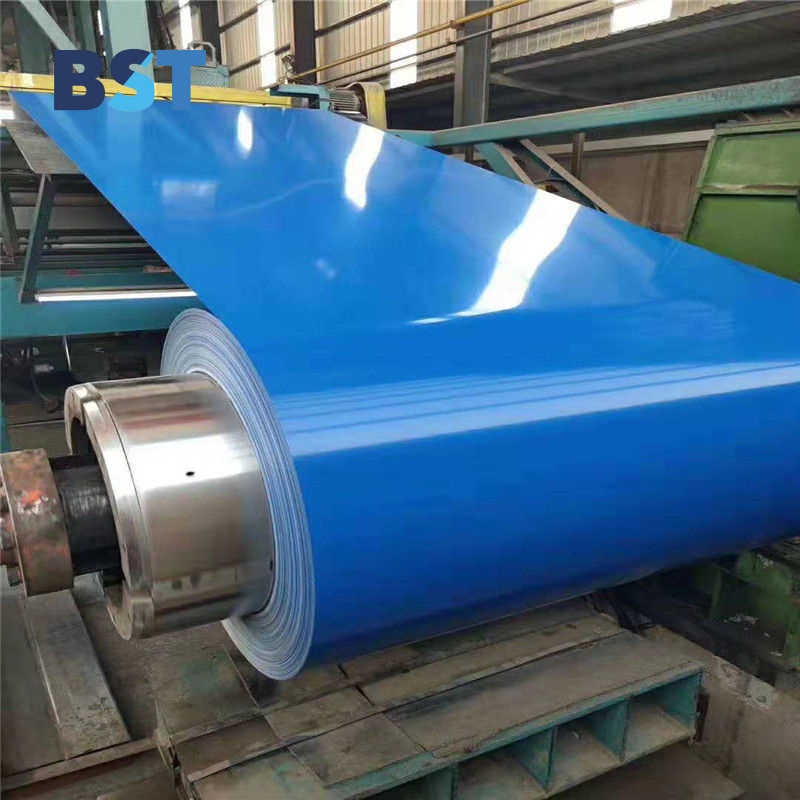
What is Color Coated Steel Coil?
At its core, color coated steel coil is manufactured by applying one or more layers of organic coatings to a metal substrate. The substrate provides mechanical strength, while the coating acts as a barrier against corrosion, UV radiation, and environmental wear. The result is a product that offers:
- Exceptional durability (service life ranging from 8 to 30+ years, depending on the coating type)
- Lightweight yet high tensile strength (easy to process and install)
- Low maintenance and cost-effectiveness (reduces long-term replacement expenses)
- Versatile aesthetics (customizable colors and finishes to match design needs)
This unique combination of properties makes color coated steel coil a preferred choice for both indoor and outdoor applications, from residential roofing to high-end appliance panels.
Key Classifications of Color Coated Steel Coil
To meet diverse industry demands, color coated steel coil is classified based on two critical factors: substrate type and coating system. Understanding these classifications helps in selecting the right product for specific use cases.
1. Classification by Substrate Type (Core Performance Driver)
The substrate is the foundation of color coated steel coil, directly influencing its corrosion resistance, strength, and cost. The most common substrates include:
- Hot-dip Galvanized Substrate
The global mainstream option, featuring a zinc coating (grades Z12, Z18, Z25, Z27—measured in g/m²). It balances excellent rust resistance and affordability, making it ideal for general construction (roofing, wall panels) and low-to-moderate corrosive environments.
- Galvalume Substrate
Coated with a 55% aluminum-zinc alloy (AZ50, AZ100, AZ150) or 5% aluminum-zinc alloy, this variant offers superior corrosion resistance and heat reflectivity compared to galvanized steel. It’s perfect for harsh outdoor environments like coastal areas, deserts, or industrial zones.
- Electro-galvanized Substrate
With a smooth, high-precision surface (grades -P and -M), it’s designed for applications requiring strict aesthetic standards, such as home appliance panels, decorative parts, and electronic device casings.
- Cold-rolled Substrate
A cost-effective option without zinc/aluminum coating, suitable only for indoor, non-corrosive environments (e.g., internal partitions, low-cost furniture). It’s less common due to limited durability.
2. Classification by Coating Type (Service Life & Performance)
The coating system determines the product’s weather resistance, scratch resistance, and longevity. The four primary coating types are:
- Polyester Coating (PE)
The most widely used coating, offering good flexibility, impact resistance, and color retention. It’s cost-effective and suitable for indoor and mild outdoor applications (service life: 8–15 years).
- Silicone Modified Polyester Coating (SMP)
Enhanced with silicone resin, SMP coating delivers better weather resistance and heat resistance than PE. It has high hardness and scratch resistance, making it ideal for outdoor building materials (roofing, wall panels) with a service life of 15–20 years.
- High-durability Polyester Coating (HDP)
Formulated with high pigment content and advanced resins, HDP coating provides excellent UV resistance and anti-chalking performance. It’s a cost-effective alternative to fluorocarbon coating, with a service life of 20–25 years.
- Fluorocarbon Coating (PVDF)
The premium coating option, made with PVDF resin (polyvinylidene fluoride). It offers superior corrosion resistance, weatherability, and chemical resistance, suitable for high-end buildings, coastal projects, and harsh industrial environments (service life: 25+ years).
Coating Structures: Tailored for Application Needs
The coating structure directly impacts processing performance and service life, with customizable options to match specific use cases:
- 2/2 (Two Coats & Two Bakes): Double coating and double baking on front and back. Thick coating with high hardness, ideal for corrugated sheets (roof tiles) but not recommended for sandwich panels (limited bending performance).
- 2/1 (Two Coats & One Bake): Double coating on front, single coating on back. Balanced performance and flexibility, the standard structure for sandwich panels (composite panels).
- 2/1M: Versatile structure compatible with both corrugated sheets and sandwich panels, widely used in the construction industry.
- 1/1 (One Coat & One Bake): Single coating on front and back. Cost-effective, suitable for low-end indoor applications.
- Special Structures (e.g., 2/0): Customized with double front coating and no back coating, designed for non-corrosive scenarios.
International Standards & Common Grades
Color coated steel coil adheres to global standards, ensuring compatibility and quality consistency across markets. Familiarizing yourself with these standards and grades is crucial for sourcing and application.
Main International Standards
- JIS (Japanese Industrial Standards): Widely accepted globally, especially in Asia and parts of the Middle East.
- EN (European Norm): Used in Europe, Africa, and the Middle East, emphasizing formability and corrosion resistance.
- DIN (German Standard): Focused on precision and performance, adopted for high-quality applications.
- ASTM (American Society for Testing and Materials): Tailored for North American markets, with strict quality control criteria.
Common Grades
- CGCC (JIS G 3312): The universal grade for global applications, recognized for stable performance and easy processing. Ideal for construction and general use.
- DX51D+Z (EN 10142): Preferred for galvanized substrates, offering excellent formability for European and African markets.
- DX51D+AZ (EN 10142): Designed for galvalume substrates, suitable for coastal and high-corrosion environments.
- SGCC (JIS G 3312): Popular for general-purpose applications, balancing performance and cost.
Standard Specifications
Color coated steel coil specifications are standardized for global compatibility, with flexibility for customization. The key parameters include:
1. Thickness
- Range: 0.14mm – 1.5mm
- Hot-selling specifications: 0.3mm, 0.35mm, 0.4mm, 0.5mm, 0.6mm, 0.8mm, 1.0mm, 1.2mm
- Tolerance: Positive, negative, or zero (flat) tolerance (customizable to JIS/EN/ASTM standards)
2. Width
- Standard widths: 1000mm, 1200mm (global construction standard)
- Custom widths: 914mm (American standard), 1250mm, 1500mm (support slitting to 300mm–1500mm)
3. Coil Weight & Dimensions
- Standard coil weight: 3–5 tons/coil (optimized for transportation and on-site processing)
- Custom weight: Light coils (≤3 tons) or heavy coils (≥5 tons)
- Inner diameter (ID): 508mm (international standard, compatible with global processing equipment)
4. Winding Direction
- Normal Coil: Top coat on the outside (mainstream, easy for uncoiling and processing)
- Reverse Coil: Top coat on the inside (customized for special processing needs)
Color Options & Customization
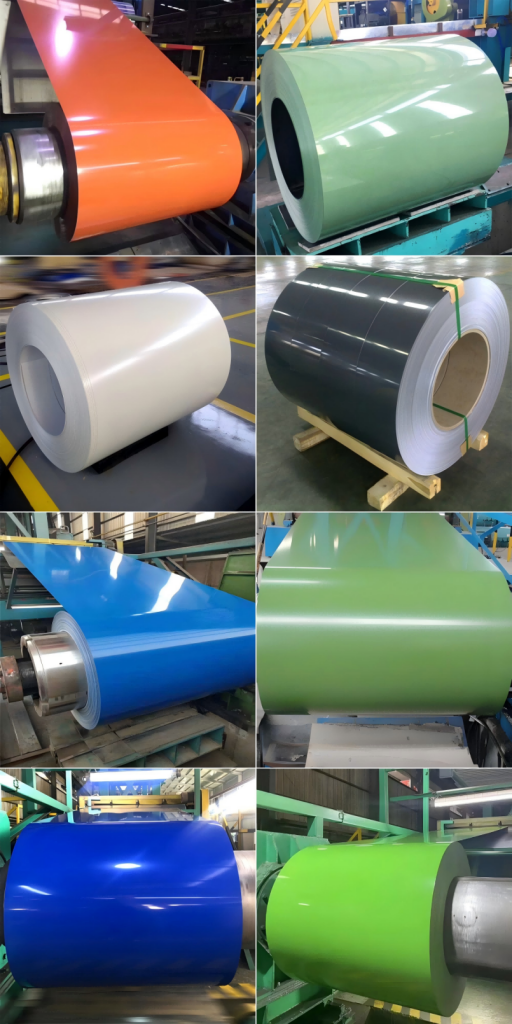
Color coated steel coil offers a rich color palette to meet design and branding requirements. Standard colors with universal appeal are available, while custom color matching is offered for bulk orders.
Standard Colors (Global Mainstream)
| Color Name | Common Application Scenario |
| Sea Blue | Roofing, wall panels |
| White Gray | Industrial plants, villas |
| Ivory White | Clean workshops, cold storage |
| Sapphire Blue | Coastal buildings |
| Gray White | Commercial complexes |
| Scarlet | Accent panels, decorative parts |
| Pea Green | Landscape buildings, resorts |
Custom Color Matching
For bulk orders (MOQ ≥ 30 tons), color matching is available using RAL or Pantone color cards. The color difference is controlled within ΔE ≤ 1.5 (international standard), ensuring consistency with customer requirements. Color samples can be provided for confirmation before mass production.
Global Applications of Color Coated Steel Coil
Color coated steel coil’s versatility makes it indispensable across industries worldwide. Below are the key application fields, with specific use cases:
1. Construction Industry (70% of Global Demand)
The largest application sector, where color coated steel coil is used for:
- Roofing & Wall Panels: Corrugated sheets (820 type, 840 type, 900 type), antique glazed tiles (828 type) for villas, industrial plants, resorts, and temporary buildings.
- Sandwich Panels (Composite Panels): Rock wool or polyurethane composite panels (960 type, 950 type) for clean workshops, cold storage, shopping malls, and building extensions.
- Steel Structure Accessories: C/Z purlins, window frames, rolling shutters, and door frames.
- Large-span Buildings: Arch sheets (760 type, 820 type) for stadiums, warehouses, and transportation hubs.
2. Home Appliance Industry
Used for the outer panels and inner linings of household appliances, thanks to its smooth surface and corrosion resistance:
- Refrigerators, washing machines, and microwave ovens
- Air conditioners, water heaters, and vending machines
- Copiers, printers, and electric fans
3. Transportation Industry
Ideal for lightweight, durable decorative parts in transportation tools:
- Automobile/train interior panels, instrument panels, and partitions
- Ship interior decoration and container components
- Airport luggage carts and transportation equipment casings
4. Other Industries
- Commercial Display: Counters, shelves, and signboards
- Furniture: Wardrobes, bookshelves, and filing cabinets
- Small Metal Products: Mailboxes, toolboxes, and decorative items
Quality Assurance & Handling Essentials
For reliable performance and long service life, quality control and proper handling are critical. Below are key considerations:
Key Quality Control Criteria
- Coating Adhesion: Passes cross-cut test (ISO 2409) and impact test (ASTM D2794) to ensure no peeling or cracking.
- Corrosion Resistance: Salt spray test (ASTM B117) confirms resistance to rust and degradation in harsh environments.
- Surface Quality: Free of scratches, pits, color differences, and missing coating.
- Dimensional Accuracy: Thickness, width, and coil weight comply with specified standards.
All products undergo strict quality inspection before delivery, with third-party inspection reports (SGS, BV, CCIC) available upon request.
Processing, Storage & Transportation Tips
- Processing: Use rubber-padded equipment for shearing/forming; avoid excessive bending (minimum bending radius ≥ 3× sheet thickness) to prevent coating damage.
- Storage: Keep in a dry, ventilated warehouse; place coils on wooden supports (10cm above ground) to avoid moisture and corrosion.
- Transportation: Use sealed packaging with protective film; for sea freight, include desiccants in containers to prevent salt spray damage. Secure coils with soft ropes to avoid collision during transit.
Conclusion: Why Choose Color Coated Steel Coil for Your Project?
Color coated steel coil is a cost-effective, durable, and versatile solution that meets the demands of global industries. Its unique combination of structural strength, corrosion resistance, and aesthetic flexibility delivers long-term value across construction, home appliances, transportation, and more. By understanding its classifications, specifications, and performance characteristics, you can select the optimal product for your specific application—ensuring reliability, efficiency, and cost savings.
For customized technical support, specification matching, or sample requests, contact industry experts to navigate your color coated steel coil sourcing journey.