Key Differences Between Pickled, Cold Rolled Hard, Cold Rolled, ESP and EPS Steel Coils
If you’re working in steel trading, manufacturing, or construction, you’ve probably heard terms like pickled steel coil, cold rolled coil, cold rolled hard coil, ESP steel, and EPS steel. Many buyers mix them up because they look similar but have different production processes, performance, and uses.
In this guide, we explain the key differences between these five common steel coil types in simple, clear terms—so you can choose the right product for your project and avoid costly mistakes.
What Is Pickled Steel Coil?
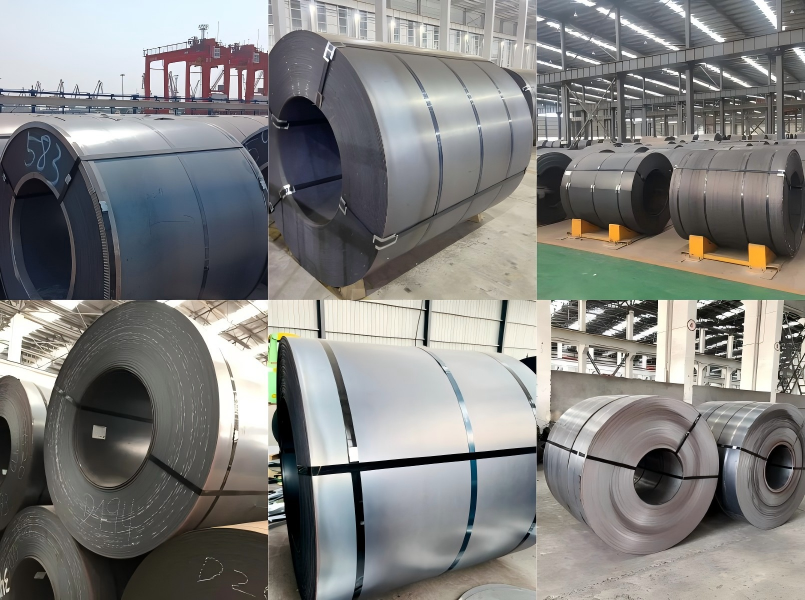
Pickled steel coil, also called hot rolled pickled and oiled coil (HRPO), is made by removing oxide scale from hot rolled steel using acid pickling.
- Process: Hot rolled → acid pickling → oiled
- Surface: Clean, smooth, no oxide
- Advantages: Good formability, cost-effective
- Applications: General structural parts, stamping, tubes, pipes
What Is Cold Rolled Hard Steel Coil?
Cold rolled hard coil is an intermediate product after cold rolling, without full annealing.
- Process: Pickled hot rolled → cold rolled (no annealing)
- Features: High hardness, high strength, low ductility
- Uses: Raw material for further cold rolling, parts that need rigidity
What Is Cold Rolled Steel Coil?
Cold rolled steel coil is the finished precision product after cold rolling and annealing.
- Process: Cold rolled hard → annealing → temper rolling
- Surface: Excellent, smooth, uniform
- Advantages: High precision, good bending and stamping performance
- Applications: Home appliances, automotive parts, electronics, cabinets
What Is ESP Steel Coil?
ESP steel coil is a thin hot rolled product from the ESP continuous casting and rolling line.
- Process: ESP continuous casting rolling → pickling → tempering
- Key point: It is hot rolled, not cold rolled
- Advantages: Thin gauge, stable performance, lower cost
- Applications: Structural parts, profiles, frames, general components
What Is EPS Steel Coil?
EPS coil uses acid-free mechanical pickling instead of traditional acid pickling.
- Process: Hot rolled → mechanical descaling (sandblasting)
- Features: Eco-friendly, higher surface roughness
- Advantages: Green production, no acid pollution
- Applications: Structural parts where surface finish is not critical
Quick Comparison Table
| Product Type | Process | Surface | Gauge |
|---|---|---|---|
| Pickled Steel Coil | Hot rolled + acid pickling | Good | Thick |
| Cold Rolled Hard Coil | Cold rolled (no annealing) | Good | Thin |
| Cold Rolled Coil | Cold rolled + annealing | Excellent | Thin |
| ESP Steel Coil | ESP continuous hot rolling | Good | Thin |
| EPS Steel Coil | Hot rolled + mechanical pickling | Rough | Thick |
FAQs for Steel Buyers
1. Is pickled steel hot rolled or cold rolled?
Pickled steel is hot rolled steel with surface treatment, not cold rolled.
2. Is ESP steel cold rolled?
No. ESP steel is produced by hot rolling technology, even though it is thin and smooth.
3. What is the difference between cold rolled hard and cold rolled coil?
Cold rolled hard is unannealed (hard, not flexible).
Cold rolled coil is annealed (softer, better for forming).
Conclusion
Each type of steel coil serves different purposes:
- Cold rolled: Best for high-quality surface and precision parts
- Pickled & ESP: Cost-effective for structural and general use
- Cold rolled hard: For high-strength semi-finished products
- EPS: Eco-friendly pickling for less demanding surface applications
Understanding these differences helps you select the right material, control costs, and improve product quality.