Steel for Fasteners: A Complete Introduction to Cold Heading Steel
Professional Guide to Cold Heading Steel Materials, Performance, Standards, Manufacturers & Applications for Fastener Manufacturing
1. Overview
1.1 Steel Materials for Fasteners
Fasteners are indispensable industrial components with a wide range of types and applications. They operate under extreme and complex working conditions, including high/low temperature, high pressure, corrosive environments, heavy alternating loads, shear and torsion stress. They must also resist preloading failure, hydrogen embrittlement, delayed fracture and other failure modes.
For this reason, material selection for fasteners is critical. Inappropriate material choice not only increases production costs and shortens service life, but may also lead to catastrophic safety accidents in machinery, construction, automotive and aerospace fields.
Common fastener materials include carbon steel, stainless steel, titanium alloy, copper alloy, aluminum alloy, nylon, carbon fiber and more. Among them, carbon and alloy steel for fasteners stands out for its outstanding cost performance, recyclability, strong processing adaptability and excellent mechanical properties.
More than 70% of the mechanical properties of fasteners are determined by the base steel material. Meanwhile, over 85% of modern fasteners are manufactured through the advanced cold heading process. This makes cold heading steel the most widely used and high-quality raw material for the global fastener industry.
1.2 Applications of Cold Heading Steel
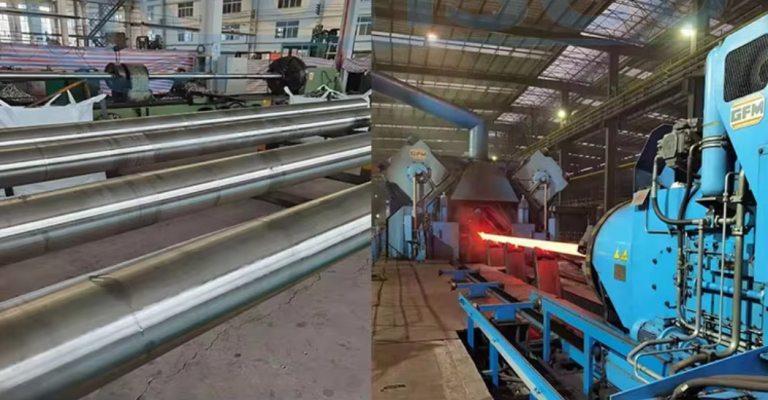
Cold heading steel mainly includes low-carbon, medium-carbon high-quality carbon structural steels and alloy structural steels. It is a special steel grade that can be formed into fasteners at room temperature via the cold heading process.
As a metal plastic forming material, cold heading steel features:
- Dense internal microstructure
- Excellent mechanical properties
- High yield rate
- Low energy consumption
- High dimensional accuracy
- Superior surface finish
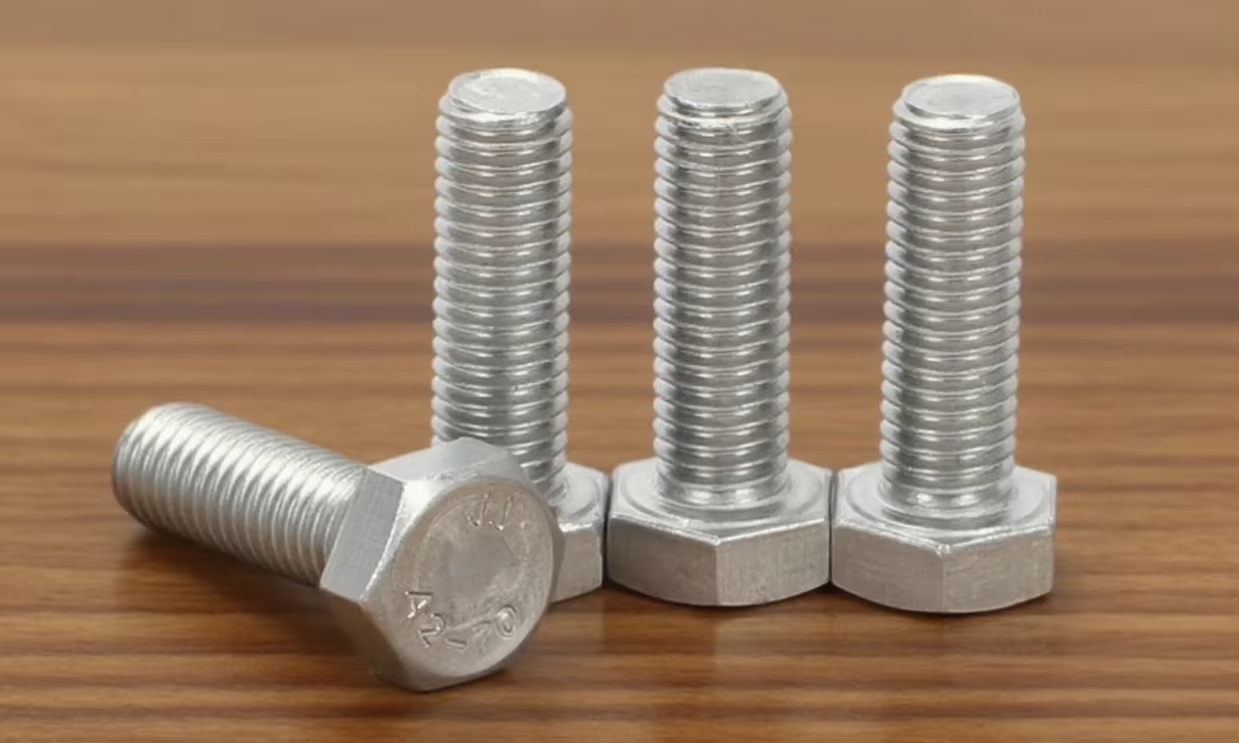
It is widely used to produce screws, bolts, nuts, tapping screws, drywall screws and various custom fasteners, serving core industries such as automotive manufacturing, machinery equipment, aerospace, construction engineering, electrical appliances and more.
2. Current Development of Cold Heading Steel
2.1 Production Development of Cold Heading Steel in China
China’s cold heading steel industry has achieved leapfrog development from total dependence on imports to global leadership:
- 1969: China developed multi-station automatic cold heading machines, but still could not produce domestic cold heading steel.
- 1987: Ma Steel introduced China’s first German SMS high-speed wire rod mill, only producing hot-rolled round steel for standard parts (GB715) and ordinary carbon steel for nails. It successfully trial-rolled ML35 and 35K cold heading steel wire rods with billets from Baosteel, marking the first domestic cold heading steel wire rod.
- March 1993: Baosteel’s first high-speed wire rod production line was put into operation, ending China’s reliance on imported cold heading steel for the fastener industry.
- 2003: Ma Steel completed technical transformation of its high-speed wire rod production line.
- 2005: Ma Steel mass-produced cold heading steel and developed innovative products including ultra-fine grain non-quenched and tempered cold heading steel, annealing-free ML35/35K, and reduced-annealing 35CrMo (SCM435). Domestic key steel enterprises (Ma Steel, Baosteel, Wuhan Steel, Xiang Steel, An Steel) produced 4.2 million tons of cold heading steel, ranking first in the world.
- 2018: China’s total steel output reached 1 billion tons, including 144.4 million tons of wire rods and 49.7488 million tons of industrial wire rods. Cold heading steel output hit 8.8734 million tons, accounting for 6.14% of total wire rods and 17.8% of industrial wire rods.
- 2019: 9.20 million tons; 2020: 8.90 million tons; 2021: 10.50 million tons; 2022: 9.65 million tons.
2.2 Capacity Status of Cold Heading Steel
- 2018: China had about 250 high-speed wire rod production lines.
- Current: Approximately 305 high-speed wire rod lines nationwide, with 42 enterprises producing cold heading steel (70 lines for mixed high-quality and general steel production).
- Total capacity: Around 15 million tons; annual stable market demand: 10–11 million tons.
Product specifications fully cover Φ5.5mm – Φ42mm (max Φ50mm). Steel grades include low-carbon, medium-carbon, low-alloy (boron steel), alloy steel and non-quenched and tempered cold heading steel.
These materials support fasteners with property classes 4.6 to 12.9, with stable supply for 14.9-grade alloy steel fasteners and bulk order availability for 18.9-grade raw materials.
2.3 Standards for Cold Heading Steel
China ranks among the world’s top in both output and quality of cold heading steel.
Based on ISO 4954, China’s current national standard is GB/T 6478-2015 Steel for Cold Heading and Cold Extrusion, revised multiple times in the past decade. Industrial association standards (China Metalforming Association, SAE-China, etc.) also refer to this core standard, with some special grades not yet included in the national standard.
International and domestic fastener standards usually specify performance classes rather than mandatory material selection. Manufacturers must avoid low-grade steel for high-performance applications, as safety and reliability are the top priorities for finished fasteners.
- 1985: China independently developed 20MnTiB cold heading steel, widely used in the Chengdu-Kunming Railway and steel structure bridges. It features high strength, low alloy content, excellent cost performance and is mainly used for 10.9-grade fasteners.
- 2004–2010: Ma Steel-led ultra-fine grain non-quenched and tempered cold heading steel was included in GB 29087-2012.
- GB/T 3098.22 Mechanical Properties of Non-Quenched and Tempered Steel Fasteners has been applied to ISO/TC 2 for international standard accreditation since 2016.
3. Technical Requirements for Cold Heading Steel
Qualified cold heading steel wire rods must meet strict technical specifications for fastener manufacturing:
3.1 Chemical Composition
For alloy structural cold heading steel, harmful elements such as oxygen, phosphorus and sulfur easily cause inclusions and cold forging cracks. Their content must be controlled at the medium-low range.
3.2 Surface Quality
- Dimensional tolerance: ±0.15mm
- Ovality: ≤0.10mm
- Maximum depth of surface cracks/scratches: ≤0.07mm
3.3 Decarburization Control
| Diameter Range | Full Ferrite Decarburization | Total Incomplete Decarburization |
|---|---|---|
| ≤14mm | ≤0.015mm | ≤0.10mm |
| 16–24mm | ≤0.020mm | ≤0.12mm |
| 27–42mm | ≤0.030mm | ≤0.15mm |
3.4 Non-Metallic Inclusions
- Within 2mm from the surface, Type B inclusions ≤15μm
- Type B and Type D inclusions generally controlled within Grade 2
3.5 Metallographic Structure
Standard structure: ferrite + granular pearlite
Ideal structure: Uniformly distributed pearlite grains on the ferrite matrix for stable cold heading performance.
3.6 Macrostructure
No shrinkage cavity, lamination, flake, crack or porosity. Central porosity and square segregation ≤ Grade 2.
3.7 Grain Size
- Fasteners above Grade 10.9: Optimal grain size Grade 7–8
- Other grades: Grain size controlled at Grade 5–7
3.8 Cold Heading Performance
- Reduction of area ≥ 50%
- Yield ratio ≤ 70%
- Lower cold working hardening coefficient for better formability
4. Top Manufacturers of Cold Heading Steel
4.1 Baowu Group
- Maanshan Iron & Steel (Ma Steel): Pioneer in China’s cold heading steel industry, first to trial-produce cold heading steel and develop non-quenched and tempered steel. Cold heading steel wire rod is its core product.
- Baoshan Iron & Steel (Baosteel): Launched China’s first commercial cold heading steel production line in March 1993. Supplier of high-end cold heading steel for national defense, aerospace, high-speed rail, automotive and biomedical industries.
4.2 Xingtai Iron & Steel (Xing Steel)
One of China’s leading specialized manufacturers of cold heading steel, with a historical annual output peak of 1.5 million tons. Despite production adjustments due to environmental protection and relocation, it remains a key supplier in the fastener steel market.
4.3 Jinan Iron & Steel (Ji Steel)
Started cold heading steel production in 2008, with stable annual output of 550,000–600,000 tons. Focused on upgrading from general steel to high-quality special steel for fasteners.
4.4 Zhongtian Iron & Steel
Exceeded 800,000 tons of cold heading steel output in 2022. Supported by the R&D team from Shanghai University, it has achieved rapid growth in both quality and production capacity.
4.5 Xiangtan Iron & Steel (Xiang Steel)
One of the earliest cold heading steel producers in China, first to adopt coil collection technology. Specializes in low-carbon cold heading steel 06AL and 08AL.
4.6 Other Qualified Steel Mills
An Steel, Xingcheng Special Steel, Qingdao Steel, Shaoguan Steel, Nanjing Steel, Shagang, Sanming Steel, Xintai Steel, Rizhao Steel, Jianlong Beiman, Xinxing Ductile Iron Pipes, Longteng Steel, Yuanli Steel, Yong Steel and more high-quality suppliers.
5. Future Prospects of Cold Heading Steel
5.1 Narrowing the Gap with International Advanced Levels
China’s cold heading steel industry will continue to improve in:
- Surface quality, batch stability and wire rod uniformity
- Precision control of chemical composition fluctuation
- Development of special steel for extreme conditions: high/low temperature resistance, fatigue resistance, thermal creep resistance, ultra-pure steel, hydrogen/oxygen/nitrogen control
The industry will optimize smelting and rolling processes, strengthen cooperation with research institutions, and break through technical bottlenecks to produce high-performance cold heading steel.
5.2 Developing New Grades for Emerging Industries
Future R&D focuses on innovative cold heading steel for high-end fasteners:
- Low-nickel high-strength steel
- Weathering steel (maintenance-free)
- Marine-grade steel (low-temperature, corrosion-resistant, multi-specification)
- Precision alloy micro-fastener wire for AI industry
- Antibacterial steel for biomedical applications
- Special steel for defense and aerospace fasteners
5.3 Market Trend & Development Direction
Supported by national industrial policies, the global cold heading steel market will maintain steady growth. Demand will surge in high-end manufacturing (automotive parts, medical devices) and marine engineering.
Cold heading steel will develop toward higher performance, better quality and greener environmental protection, becoming the core material supporting the global high-strength fastener industry.