Stainless Steel: The Outstanding Corrosion & High-Temperature Resistant Material
If you work in manufacturing, construction, or engineering, you’ve almost certainly come across stainless steel. It’s one of the most widely used metals in the world—and for good reason. In this post, we’ll break down everything you need to know: what stainless steel is, its key properties, classifications, history, common grades, and where the industry is heading next.
1. What Is Stainless Steel?
① Definition
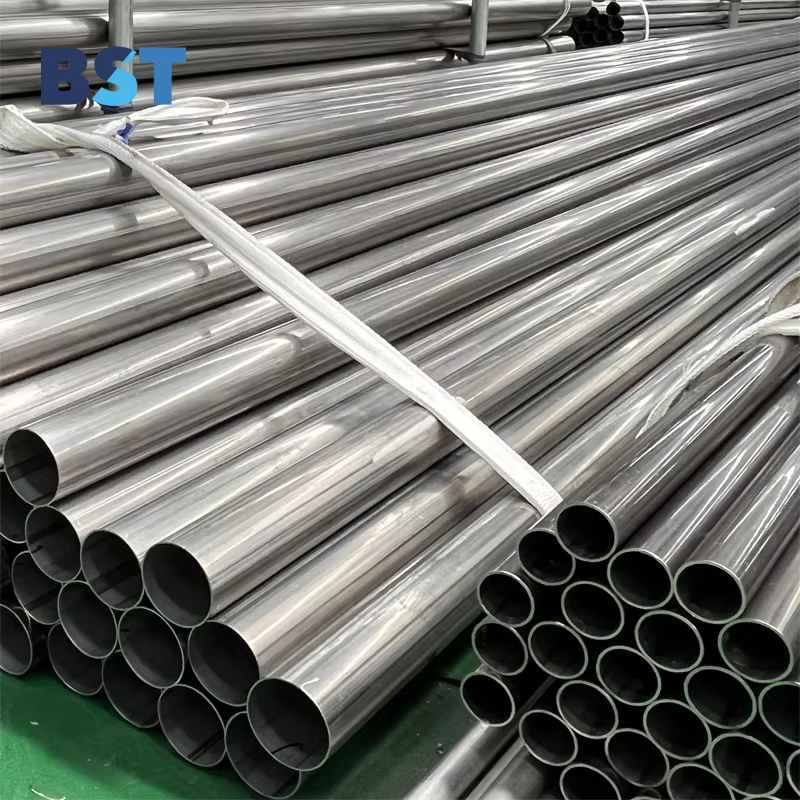
At its core, stainless steel is a high-alloy steel with outstanding chemical stability in corrosive environments like air, water, saltwater, acids, and alkalis.
By standard definition, it describes a group of iron-based alloys with a chromium content of at least 10.5% and a carbon content no higher than 1.2%. That chromium content is what makes it “stainless” in the first place.
② Key Properties
The most defining features of stainless steel are its rust resistance and corrosion resistance, and these traits are directly linked to chromium.
Put simply: the more chromium, the better the corrosion resistance. Chromium forms a thin, protective passive film on the steel surface, blocking oxidation and giving the metal its long-lasting anti-corrosion performance.
③ Main Applications
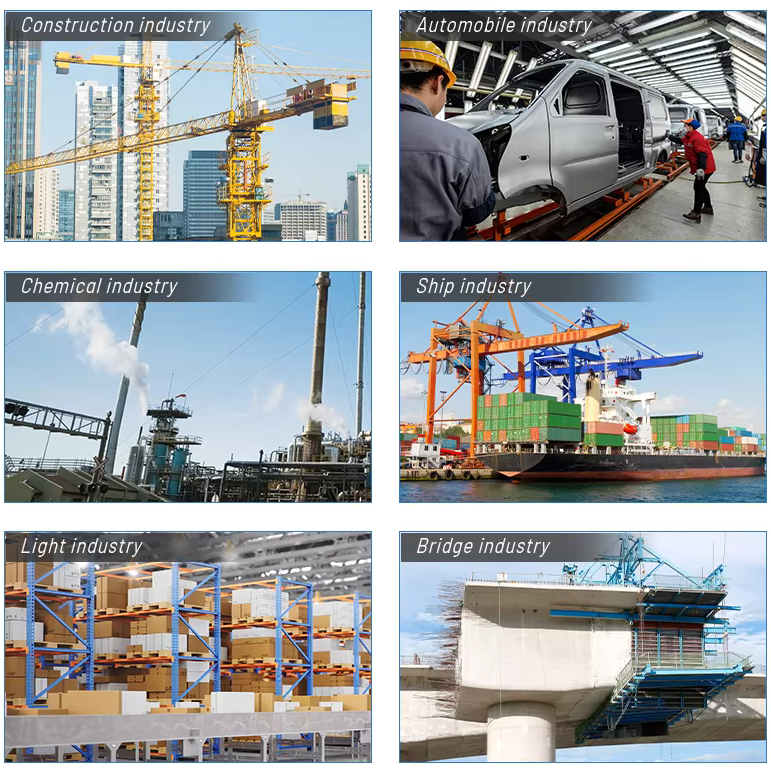
Stainless steel isn’t just durable—it’s practical. It offers great corrosion resistance, wear resistance, high strength, and reliable mechanical properties, making it incredibly valuable across nearly every modern industry.
Today, you’ll find stainless steel used in:
Automotive, aerospace, petrochemical, medical, electronics, construction, machinery, power generation, military, refrigeration, and many more.
2. How Is Stainless Steel Classified?
Stainless steel isn’t a single material—it’s a whole family of alloys, grouped in several different ways based on composition, use, and structure.
① By Main Chemical Composition
- Chromium stainless steel (typified by Cr13)
- Chromium-nickel stainless steel (typified by Cr18Ni8)
- Chromium-manganese stainless steel
- Chromium-nickel-molybdenum stainless steel
- Ultra-low carbon stainless steel (such as 316L)
- High-molybdenum stainless steel
- High-purity iron stainless steel
② By Performance & Application
- Nitric acid-resistant stainless steel
- Sulfuric acid-resistant stainless steel
- Urea-grade stainless steel
- Pitting corrosion-resistant stainless steel
- Stress corrosion-resistant stainless steel
- High-strength stainless steel
③ By Functional Features
- Heat-resistant stainless steel
- Low-temperature & cryogenic stainless steel
- Non-magnetic stainless steel
- Free-machining stainless steel
- Superplastic stainless steel
④ By Service Environment
A common point of confusion is the difference between “stainless steel” and “acid-resistant steel”:
- Stainless steel: Resists rust in weak corrosive environments like air, water vapor, and freshwater.
- Acid-resistant steel: Performs well in strong corrosive media like acids, alkalis, and salts.
In daily use, people usually just call both types “stainless steel”. One important note: steel that resists atmospheric corrosion won’t always stand up to strong acids, but acid-resistant steel will almost always resist air and water corrosion.
⑤ By Metallographic Microstructure
This is the most practical way to categorize stainless steel for industrial use:
Austenitic Stainless Steel
Contains over 18% chromium, around 8% nickel, plus small amounts of molybdenum, titanium, nitrogen, etc.
- Great all-around performance
- Resists many types of corrosion
- Non-magnetic (can gain slight magnetism after cold working)
- Labeled in the 200 and 300 series (e.g., 304 stainless steel)
Ferritic Stainless Steel
Chromium content: 12%–30%
- Corrosion resistance, toughness, and weldability improve with higher chromium
- Better resistance to chloride stress corrosion than other types
- Magnetic
- Cannot be hardened by heat treatment
- Labeled as 430, 446, etc.
Martensitic Stainless Steel
- High strength, but lower ductility and weldability
- Magnetic
- Mechanical properties can be adjusted via heat treatment
- Labeled as 410, 420, 440, etc.
Austenitic-Ferritic (Duplex) Stainless Steel
Combines the benefits of austenitic and ferritic stainless steel, with superplasticity.
- Higher strength than standard austenitic steel
- Much better resistance to intergranular corrosion, pitting, and chloride stress corrosion
- Magnetic, can be strengthened by cold working
- Typical grade: 329
Precipitation-Hardening Stainless Steel
Matrix structure is austenitic or martensitic, hardened through precipitation-hardening treatment.
- Labeled in the 600 series (e.g., 630 / 17-4PH)
3. A Brief History of Stainless Steel
① Global Development
Stainless steel went from lab discovery to industrial use in roughly 10 years:
- 1904–1906: French researcher Guillet pioneered studies on Fe-Cr-Ni alloys.
- 1907–1911: Portevin and Gissen identified the corrosion resistance of Fe-Cr and Fe-Cr-Ni alloys; German scientist Monnartz explained the passivation effect.
- 1912–1914: Brearley invented 12–13% Cr martensitic stainless steel and patented it.
- 1911–1914: Dant-sizen (US) created ferritic stainless steel; Maurer and Strauss (Germany) developed early austenitic stainless steel, leading to the classic 18-8 grade.
- 1930s: Stabilized austenitic grades (321, 347), duplex, and precipitation-hardening stainless steel emerged.
- 1940–1950: Precipitation-hardening grades entered military and civilian use; 200-series (Mn-replaced-Ni) stainless steel was developed to save nickel.
- 1950s–1960s: High-performance corrosion-resistant and special-purpose stainless steels came out.
- Recent decades: Specialty stainless steels for stress corrosion, pitting, and crevice corrosion (like duplex and high-moly grades) have become mainstream.
② Development in China
China’s stainless steel industry started much later:
- 1952: First industrial production, mainly 18-8 Cr-Ni austenitic steel (e.g., 1Cr18Ni9Ti).
- 1959–1960: Began developing Mn/Ni-replaced and nickel-free ferritic grades, plus many precipitation-hardening and ultra-low carbon stainless steels.
- 1970s: Duplex stainless steels were developed to solve chloride stress corrosion issues.
- 1985–1990: Large-scale push for low/ultra-low carbon stainless steel, though still behind leading global producers.
4. Common Stainless Steel Grades: Properties & Uses
The three most common stainless steel series are 200, 300, and 400. The 300 series is the most widely used, while 200 and 400 are often used as cost-effective alternatives.
Quick facts:
- 400 series: nickel-free, magnetic
- 200 series: low nickel content
- 300 series: highest nickel content, non-magnetic
Within the 300 series, the most popular grades include:
304, 304L, 316, 316L, 321, 309S, 310S
The “L” in 304L and 316L stands for low carbon, which improves weldability and corrosion resistance in welded parts.
5. Future Trends of the Stainless Steel Industry
As industries evolve, stainless steel manufacturers are racing to develop new alloys and processing technologies. The main focus is on high-performance, cost-effective, and application-specific stainless steel.
① Duplex Stainless Steel
Modern duplex stainless steel is moving in two key directions:
- High-performance super duplex steel: Higher Cr, Mo, and N for better strength and corrosion resistance (e.g., SAF2707HD, SAF3207HD).
- Cost-effective lean duplex steel: Low-nickel, low-moly or molybdenum-free grades to lower cost while keeping good workability and weldability (e.g., LDX2101, AL2003).
Europe and the US lead in duplex steel R&D, with Japan and Korea as major Asian producers. China’s main super duplex grade is 2507 (S32750).
② Stainless Steel for Ultra-Supercritical Power Boilers
China operates the world’s largest number of 600°C ultra-supercritical boilers, but most high-temperature tubes rely on imported materials (TP304H, Super304H, HR3C). For 620–630°C units, Sanicro25 (Sandvik) is the main international option.
Thankfully, Chinese researchers from the University of Science and Technology Beijing, Yongxing Special Stainless Steel, and Jiangsu Wujin Stainless Steel have developed SP2215, a new austenitic heat-resistant steel. It outperforms S30432 and S31042 at 650–700°C and is expected to replace imported grades in ultra-supercritical power units.
Wrapping Up
Stainless steel has come a long way over the past century, and its future is only getting brighter. With new alloys, smarter manufacturing, and growing demand from new energy vehicles, ships, and smart manufacturing, China’s stainless steel industry is quickly catching up to global leaders.
From everyday appliances to heavy industrial equipment, stainless steel will continue to be one of the most important materials shaping our modern world.