High-Performance Die Steel SKD61: Core Properties, Engineering Practice & Practical Guide
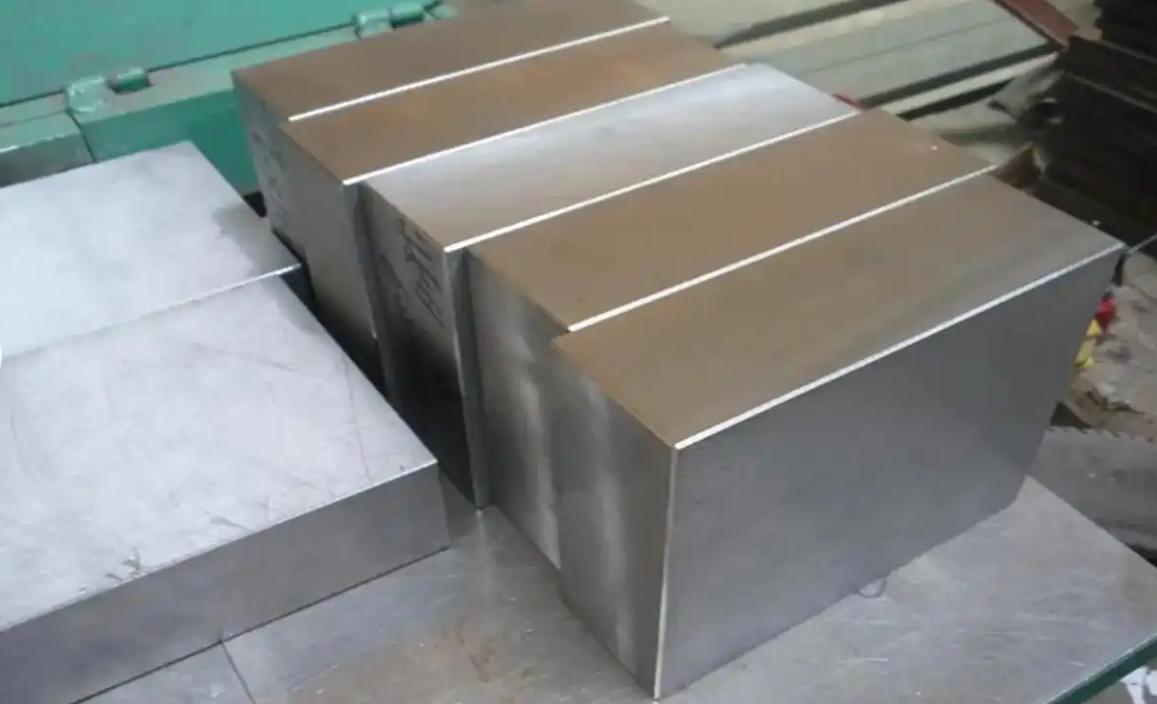
SKD61 is a high-performance hot work tool steel specially designed for hot forging, die casting and extrusion applications. With outstanding high-temperature strength, excellent thermal fatigue resistance and dimensional stability, SKD61 is widely recognized as one of the most reliable steels for tools subjected to repeated thermal cycling.
SKD61 achieves an excellent balance between hardness retention, machinability and surface treatment compatibility (including nitriding, PVD coating, CVD coating and more). This balanced performance helps significantly extend die service life, improve process predictability, and reduce maintenance frequency and production costs.
International Equivalent Grades of SKD61 Steel
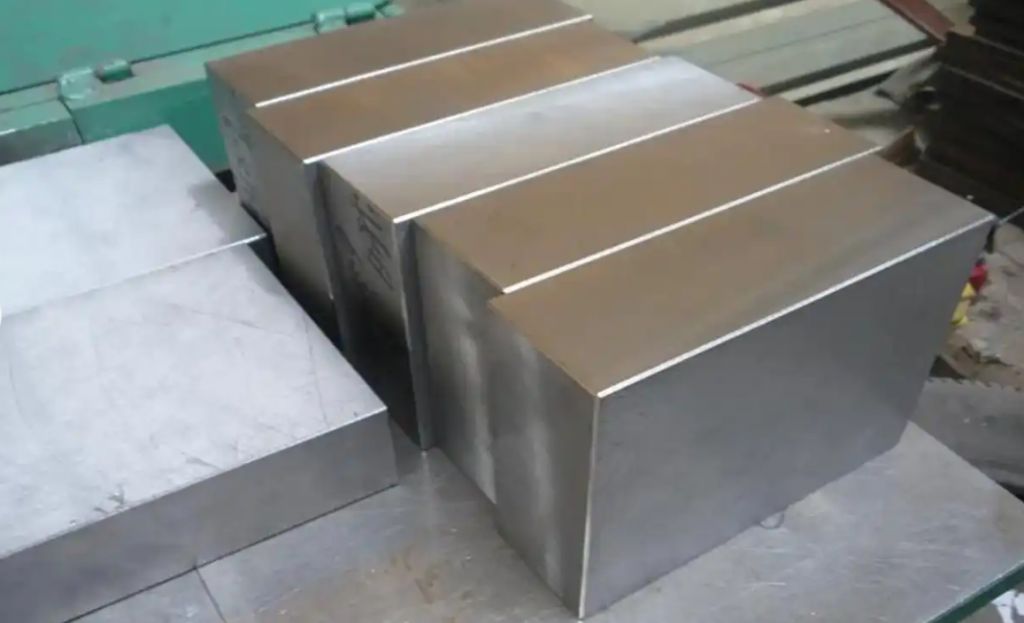
SKD61 has corresponding standard grades in major industrial countries and regions. Although the overall performance is similar, slight differences in chemical composition and heat treatment response may affect performance under high-temperature conditions. Full verification based on actual working conditions is recommended for cross-border projects or material substitution.
| Standard / Region | Grade |
|---|---|
| JIS | SKD61 |
| DIN / EN | 1.2344 |
| ASTM / AISI | H13 |
| GB | 4Cr5MoSiV1 |
| ISC | T23353 |
| ISO | X40CrMoV5-1 |
SKD61 Chemical Composition — JIS G 4404:2022
The balanced alloy design of Cr-Mo-V system is the foundation of SKD61’s excellent high-temperature performance.
| Chemical Element | Content Range (%) |
|---|---|
| C | 0.35 ~ 0.42 |
| Si | 0.80 ~ 1.20 |
| Mn | 0.25 ~ 0.50 |
| P | ≤ 0.03 |
| S | ≤ 0.02 |
| Cr | 4.80 ~ 5.50 |
| Mo | 1.00 ~ 1.50 |
| V | 0.80 ~ 1.15 |
Key Functions of Alloying Elements
- Carbon: Provides hardness and wear resistance through martensitic transformation and affects secondary hardening effect.
- Silicon: Strengthens ferrite matrix and improves resistance to tempering softening.
- Manganese: Improves hardenability and overall toughness.
- Chromium: Enhances hardenability, corrosion resistance and high-temperature strength.
- Molybdenum: Improves red hardness, secondary hardening capacity and thermal fatigue resistance.
- Vanadium: Forms fine carbides, improves wear resistance and refines grain size.
Engineering Significance
High Cr and Mo content ensure good dimensional stability and thermal fatigue resistance under repeated high-temperature cycles.
Vanadium carbides improve wear resistance on critical die surfaces.
Silicon and manganese help optimize temper stability and reduce softening risk during long-term service.
Microstructure & Material Science Analysis
Tempered Martensite & Carbide Distribution
After quenching and tempering, SKD61 forms a tempered martensite structure with uniformly distributed alloy carbides, which is the basis of its high-temperature strength and thermal fatigue resistance.
Main carbide types:
- M₆C: Rich in W and Mo, promotes secondary hardening and maintains high-temperature hardness.
- MC: Rich in V, refines grains and improves wear resistance.
- M₂₃C₆: Rich in Cr, improves high-temperature strength and resistance to temper softening.
A small amount of retained austenite (< 3–5%) usually exists after quenching. Although it slightly reduces hardness, its transformation during service helps compensate for minor stresses in thick sections and improve dimensional stability.
ESR (Electroslag Remelting) & Purity
- Reduced Inclusions: Minimizes non-metallic inclusions, which are common initiation sites of microcracks under thermal cycling.
- Improved Fatigue Life: Cleaner microstructure enhances resistance to hot cracking and thermal fatigue.
- Better Polishability: Fewer inclusions and uniform carbides improve surface finish, especially important for high-gloss or optical dies.
For die designers and engineers, ESR SKD61 provides higher reliability in long-term production and consistent high-quality surface finish, reducing maintenance and downtime.
Microstructure Evolution During Heat Treatment
- Austenitization: Heated to 1020–1080℃ to dissolve alloy carbides and form uniform austenite matrix.
- Quenching: Cooled by air, oil or vacuum to transform austenite into martensite, achieving high hardness and heat resistance.
- Tempering: Usually 2–3 times of tempering to precipitate fine alloy carbides, release internal stress, improve toughness and reduce microcracks.
Proper heat treatment optimizes the balance between hardness and toughness, which is critical for dies under thermal and mechanical loads.
Mechanical & Physical Properties
Physical Properties
- Density: ≈ 7.8 g/cm³
- Thermal Conductivity: 25–30 W/m·K
- Elastic Modulus: 210 GPa
- Thermal Expansion Coefficient: 11.5×10⁻⁶/℃
High-Temperature Strength
SKD61 is specially engineered for high-temperature die applications, maintaining both hardness and toughness under repeated thermal cycles:
- Red Hardness: Effectively retains hardness at 600–650℃, ensuring dimensional stability and consistent forming performance.
- Thermal Fatigue Resistance: Combined tempered martensite and fine alloy carbides suppress initiation and propagation of thermal cracks.
This allows SKD61 dies to perform reliably in high-speed forging, die casting and extrusion without premature softening or surface degradation.
Fatigue & Failure Mechanisms
Common failure modes of hot work dies:
- Hot Cracking: Initiates from surface defects or inclusions during rapid heating.
- Surface Chipping / Spalling: Local peeling of hardened layer caused by repeated thermal cycles.
- Oxidation / Scaling: Reduces surface integrity under long-term high temperature or corrosive environment.
Mitigation Strategies
- Control heat treatment and tempering to balance hardness and toughness.
- Adopt ESR melted steel to reduce inclusion-induced hot cracking.
- Optimize cooling system design to reduce local overheating and stress concentration.
Heat Treatment & Surface Strengthening
Standard Heat Treatment Process
- Annealing: 780–820℃, furnace cooling; hardness ≈ 220–250 HB, relieves stress and improves machinability.
- Stress Relieving: Performed after rough machining to reduce heat treatment risks.
- Austenitization: 1020–1080℃; avoid overheating to prevent grain coarsening.
- Quenching: Controlled oil cooling, air cooling or gas cooling to prevent quench cracking.
- Tempering: 540–560℃, 2–3 times; final hardness 48–52 HRC.
Engineering Tip: Reserve machining allowance for quenching and tempering deformation. Precise control of temperature, time and cooling ensures consistent performance.
Surface Hardening Technologies
- Nitriding: Forms high-hardness diffusion layer, significantly improves wear resistance; layer depth 0.2–0.4 mm, small deformation.
- PVD / CVD Coating: Such as TiN, CrN, reduces friction, adhesive wear and hot cracking.
- Composite Treatment: Nitriding + PVD provides synergistic advantages in high-cycle forging and die casting dies.
Deformation Control & Dimensional Stability
- Use reasonable fixture design to reduce warping during heat treatment.
- Reserve 0.3–0.5 mm allowance for final grinding.
- Adopt light grinding or polishing after heat treatment to achieve final dimensions.
Machining & Manufacturing Guidelines
CNC Machining Recommendations
- Milling & Turning: Use coated carbide or cermet tools; roughing speed 80–120 m/min, finishing 120–180 m/min.
- Cutting Depth: Avoid heavy one-time cutting; adopt multi-pass machining.
- Grinding: Use CBN or alumina wheels with sufficient cooling after heat treatment.
- Cooling: High-pressure cooling or atomized cooling extends tool life.
Polishing & Surface Treatment
- Sandpaper sequence: P240–P400 → P800–P1200, final polish with 6–1 μm diamond paste or colloidal silica.
- Avoid local overheating to prevent orange peel or micro scratches.
Repair & Reprocessing
- Welding: Use compatible Ni-based or stainless steel die welding wires; preheat 200–300℃.
- Post-Weld Treatment: Stress relieving or tempering to restore performance.
- Final Grinding & Polishing: Restore dimensional accuracy and surface quality.
Typical Applications & Steel Grade Comparison
Typical Applications of SKD61
- Hot forging dies
- Die casting dies (aluminum, zinc alloy)
- Extrusion dies
- Hot stamping dies
Steel Grade Performance Comparison
| Steel Grade | Red Hardness | Thermal Fatigue Resistance | Typical Applications |
|---|---|---|---|
| SKD61 | 50~52 HRC | Excellent | Hot forging, die casting, extrusion |
| SKD6 | 48~50 HRC | Medium | General hot work dies |
| H11 | 46~50 HRC | Good | Forging, extrusion |
| H13 | 46~50 HRC | Good | High-temperature industrial dies |
Engineering Cases
Case 1: High-Cycle Forging Dies
After replacing H11 with SKD61:
- Die life increased by ~30%
- Thermal fatigue cracks significantly reduced
- Dimensional accuracy maintained over 500,000 cycles
Case 2: Aluminum Alloy Die Casting
After switching from H13 to SKD61:
- Surface oxidation and wear reduced
- Reject rate decreased
- Maintenance cycle extended
Conclusion
SKD61 is an outstanding hot work tool steel with excellent thermal fatigue resistance, red hardness and dimensional stability. Its tempered martensite structure with uniformly distributed Cr-Mo-V carbides, especially in ESR refined grade, provides superior wear resistance, polishability and die life.
Through reasonable chemical composition control, precise heat treatment and advanced surface engineering (nitriding, PVD/CVD), the hardness, toughness and fatigue life of SKD61 can be further enhanced.
For engineers, designers and purchasers pursuing high-temperature durability, thermal fatigue resistance and long-term dimensional precision, SKD61 (1.2344 / H13) is a reliable and cost-effective choice superior to SKD6 or H11.