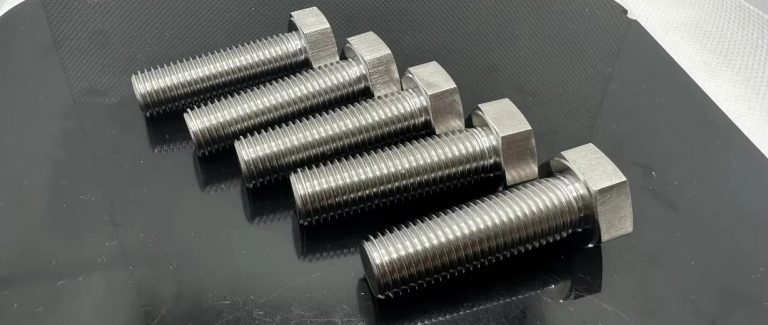
Stainless Steel Decorative Sheet Surface Finishes & Processing Technologies
Common Base Finishes: 2B Finish & BA Finish
-
2B Finish
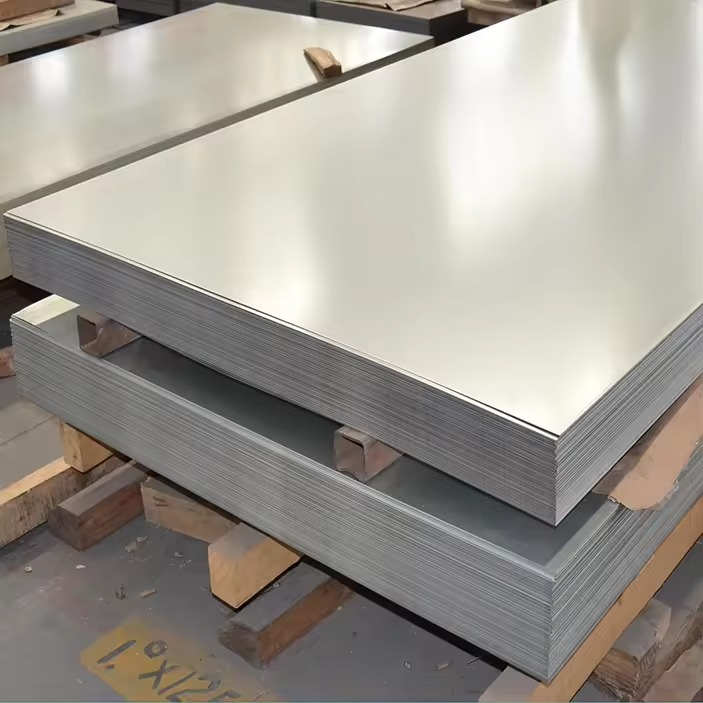
Produced through annealing and pickling. The surface has a mild oxide layer, presenting a matte, slightly dark metallic luster. It is the most common standard base finish for further processing.
-
BA Finish (Bright Annealed)
Produced via bright annealing without oxidation. The surface is clean, bright, and highly reflective, serving as an premium base for mirror polishing, plating, and other advanced treatments.
key words:Stainless Steel Decorative Sheets, 2B Finish, BA Finish, 8K Mirror Stainless Steel, Brushed Stainless Steel, Etched Stainless Steel, Vacuum Plated Stainless Steel, Antique Copper Stainless Steel, Fingerprint-Resistant Stainless Steel, Embossed Stainless Steel, Wood Grain Stainless Steel
Main Stainless Steel Decorative Processing Technologies
① Mirror Finish (8K Polishing)
Professional term: 8K finish
Grades: 6K, 8K, Precision 8K, Ultra-Precision 8K
Differences: Distinguished by surface brightness and control of polishing marks.

Specifications
- Machine-polished 8K: Thickness 0.3–3.0 mm, length 1.6 m to 4.5 m.
- Manual-polished 8K: Required for sheets over 3.0 mm thick (to avoid breaking the polishing glass pad), with customizable length.
Production Process
- Coarse grinding: Uses sandpaper, determines brightness.
- Fine grinding: Uses felt pad, controls polishing marks.
Quality Inspection Standard
② Brushed Finish (Satin Finish)

Common Grit Types
- Standard grit, snowflake grit (NO.4), straight brushed,
- Combinations: snowflake + standard, snowflake + brushed, standard + brushed, etc.
Note: Higher abrasive belt number = finer texture; lower number = coarser texture. Standard: 320# belt.
Snowflake Grit (NO.4): Intermittent texture, made with 400# belt.
Applicable Specifications
Base sheets: 2B, BA, mirror finish
Thickness: 0.4–3.0 mm
Width: 1000 mm, 1219 mm, 1500 mm (customizable)
Production Process
Quality Inspection Standard
③ Etching Finish
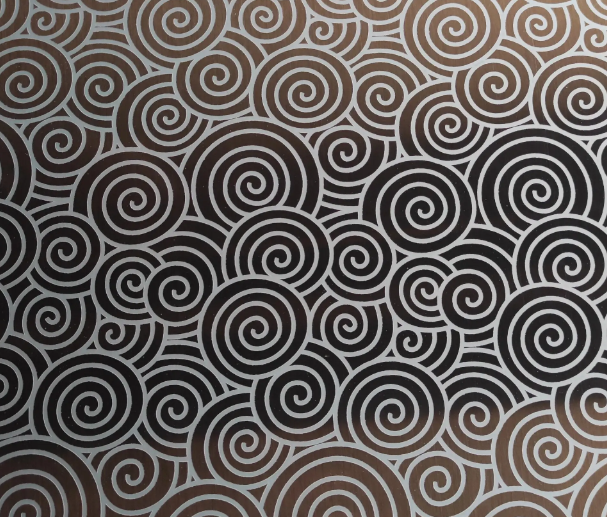
Three Etching Types
- Photosensitive Etching
Uses film exposure for patterning. Suitable for custom sizes, small batches, or deep etching. Etching depth over 20μm must use this method. Max depth: 50μm.
- Screen Printing Etching
Uses stencil and ink for patterning. Suitable for standard sizes, mass production. Etching depth: 3–15μm.
- Titanium-Stripping Etching
No depth; oxidizes partial colored coating to reveal patterns.
Production Process
Quality Inspection Standard
④ Vacuum Ion Plating
Uses target ionization in a vacuum furnace, reacting with oxygen, nitrogen, or acetylene to form a durable colored metal film on the surface.
Improves corrosion resistance, hardness, wear resistance, conductivity, heat resistance, and appearance.
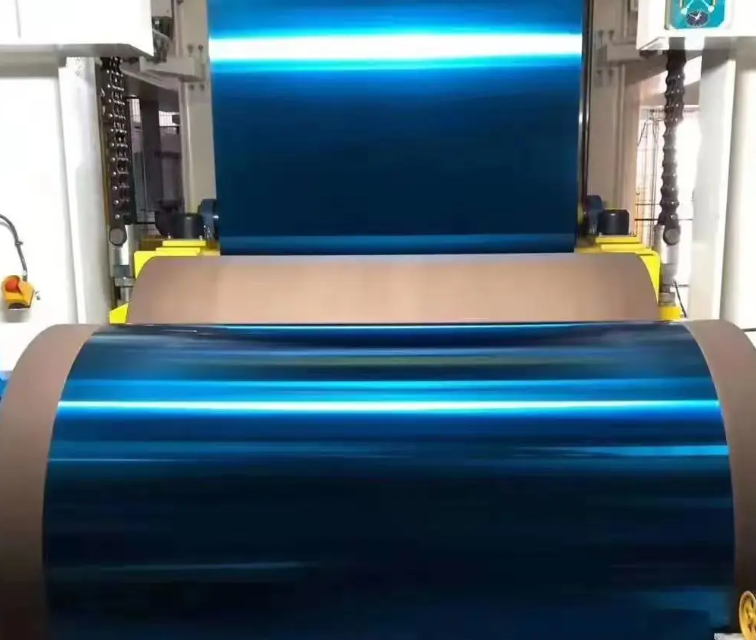
Available Colors
Applicable Specifications
Base sheets: Mirror, brushed, etched, sandblasted, disturbed, composite finish
Thickness: 0.3–3.0 mm
Width: 1000 mm, 1219 mm, 1500 mm (custom length)
Production Process
Quality Inspection Standard
⑤ Wet Black Titanium Plating
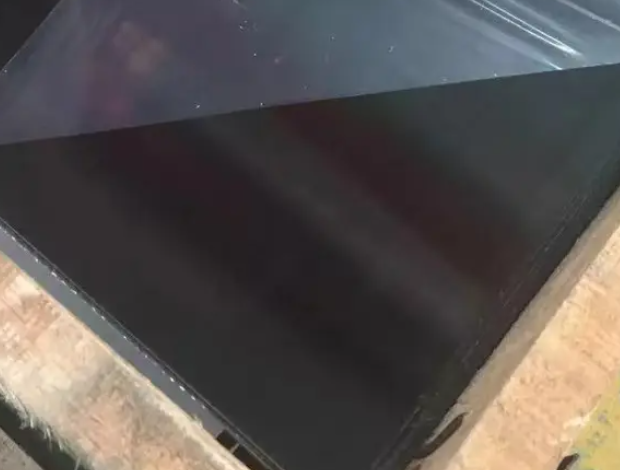
Immerses stainless steel in a chemical plating bath to create a deep black finish through chemical reaction.
Darker than vacuum plating; 90% color consistency controllable.
Causes of color difference: Chemical solution quality & sheet material.
Production Process
Quality Inspection Standard
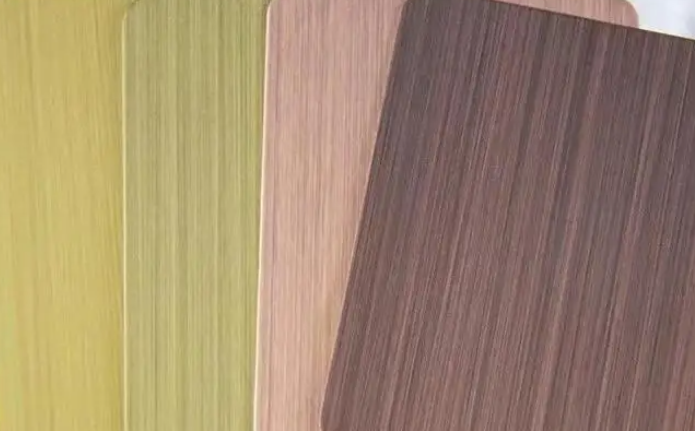
⑥ Wet Copper Plating (Antique Copper)
Pre-processing: No fingerprints, damage, or sweat.
Post-processing: Must be oil-coated to prevent oxidation.
Production Process
Quality Inspection Standard
⑦ Sandblasting Finish

Production Process
Quality Inspection Standard
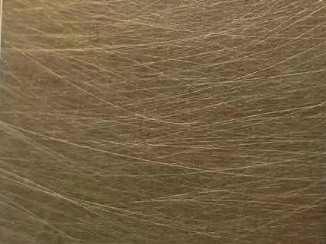
⑧ Disturbed Finish (Ornamental / Vibration Finish)
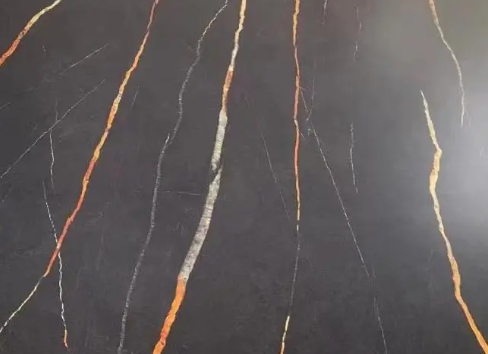
⑨ Laminated & Heat Transfer Printing (Wood Grain Stainless Steel)
- Laminated Finish: Applies adhesive and bonds protective film onto the sheet under high pressure and temperature. May crack during bending.
- Heat Transfer Printing: Uses high-temperature pressure to bond transfer paper. More flexible, less likely to crack during bending.
Applicable Specifications
Base sheet: Brushed finish
Thickness: 0.4–3.0 mm
Max width: 1219 mm (4 ft); wider sheets require splicing.
Length: Customizable.
Production Process
- Laminating: Brushing → Sheet loading → Press bonding → Film lamination
- Heat transfer: Brushing → Priming → Powder spraying → Pattern printing → Coating → Fingerprint-resistant treatment
Quality Inspection Standard
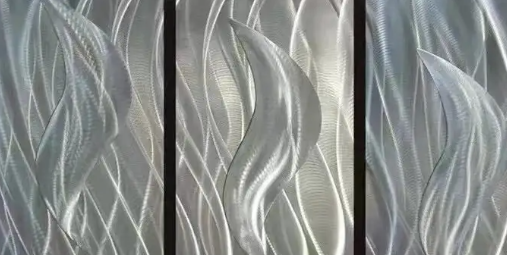
⑩ Laser CD Pattern Finish
Applicable Specifications
Base sheet: Mirror finish
Thickness: 0.4–3.0 mm
Max width: 1500 mm
Max length: 6000 mm (customizable)
Production Process
Quality Inspection Standard
⑪ Fingerprint-Resistant (Anti-Fingerprint) Coating
A final protective process applied after all other finishes.
Sprays or rolls transparent nano-oil onto the surface, which cures into a protective layer after heating.

Types
Glossy, semi-matte, matte (adjustable gloss level).
Not suitable for high-temperature environments (coating melts when heated).
Applicable Specifications
Base sheets: Brushed, etched, embossed
Thickness: 0.4–3.0 mm
Width: 1000 mm, 1219 mm, 1500 mm (custom length)
Production Process
Quality Inspection Standard
⑫ Embossed Finish
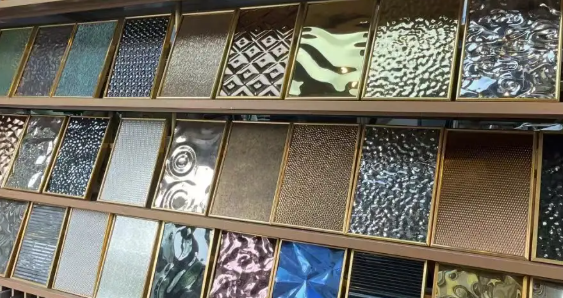
Similar appearance to etching, but with smoother edges and lower unit cost. Mold cost is high and patterns are limited.
Common product: 6K + embossed finish.
Applicable Specifications
Coil thickness: 0.4–1.2 mm (some suppliers process over 1.2 mm)
Width: 1000 mm, 1219 mm