Extruded Aluminum Profile: Complete Guide to Materials, Sizes, Finishes & Applications
If you’re looking for a lightweight, durable, and highly customizable structural material for industrial, architectural, or commercial projects,extruded aluminum profiles are absolutely your best bet. In fact, they have become one of the most widely used metal components across global industries, thanks to their unique combination of high strength, flexible design, excellent corrosion resistance, and cost-efficiency. Whether you need standard off-the-shelf aluminum extrusions or fully custom-shaped profiles, this comprehensive guide will walk you through everything you need to know, including common alloys, shapes, dimensions, production processes, surface treatments, packaging, and real-world applications.
What makes extruded aluminum profiles stand out from steel, plastic, or other metal materials? Well, first of all, they boast an outstanding strength-to-weight ratio. They are nearly one-third the weight of steel while maintaining reliable structural stability. Besides, they support endless custom cross-sections and require minimal post-processing, which greatly saves your production time and overall project costs. Let’s dive into the details one by one.
1. Common Aluminum Alloy Materials for Extruded Profiles
The material alloy directly determines the mechanical performance, surface quality, and applicable scenarios of aluminum extrusion profiles. Generally speaking, 6000-series aluminum alloys are the most mainstream choices for commercial and industrial extrusion, and each grade has its own unique advantages.
6063 Aluminum Alloy: This is the most popular and versatile option for architectural and decorative aluminum profiles. It features superb extrusion performance, smooth surface finish, and excellent anodizing and spraying effects. Moreover, it offers great corrosion resistance and moderate strength, making it ideal for windows, doors, curtain walls, and decorative frames. Most indoor and outdoor decorative extruded profiles adopt 6063-T5/T6 temper for balanced performance.
6061 Aluminum Alloy: Compared with 6063, 6061 has higher tensile strength and better hardness. It is a preferred material for structural industrial profiles. Although its surface finishing is slightly less delicate than 6063, it excels in load-bearing and anti-deformation capacity. For this reason, it is widely used for equipment frames, support structures, and heavy-duty industrial assemblies.
Other Common Alloys: In addition, 6005 and 6082 alloys are also commonly used in the industry. 6005 is suitable for medium-load structural profiles with strict surface requirements, while 6082 provides ultra-high strength for heavy engineering and transportation equipment. If you have special performance needs such as high toughness or wear resistance, we can also customize other series of aluminum alloy extrusions accordingly.
2. Popular Shapes & Standard Dimensions
One of the biggest perks of extruded aluminum profiles is their extreme design flexibility. Basically, any cross-sectional shape can be achieved with a customized extrusion die. Meanwhile, we have a full range of standard profiles in stock to meet your quick delivery needs.
Common Profile Shapes
-
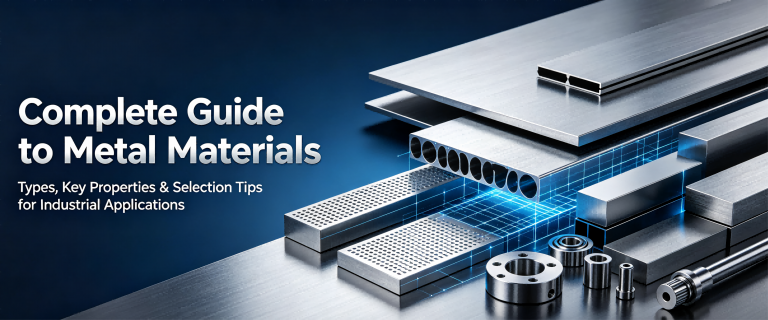
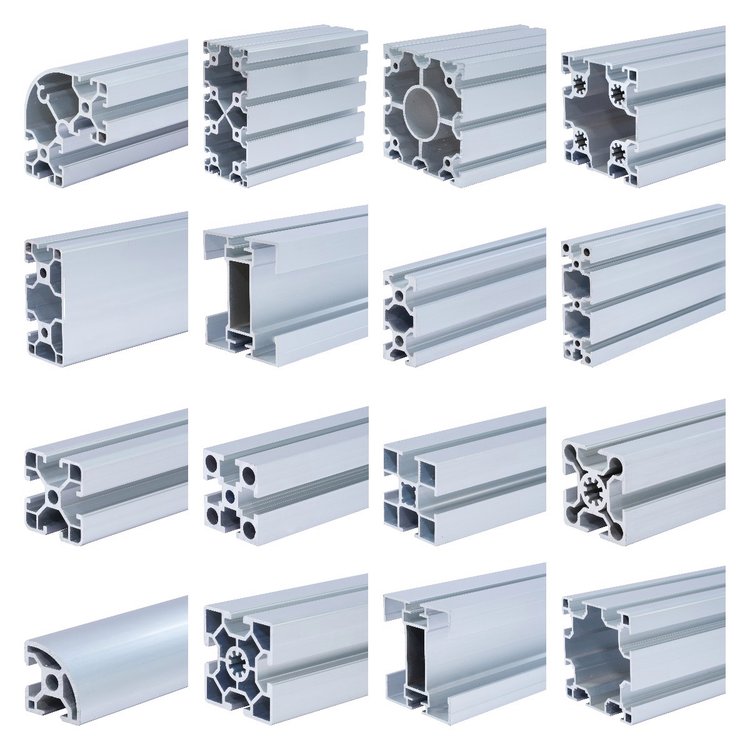
T-slot Aluminum Profiles: The most widely used industrial type, including 20 series, 30 series, 40 series, 60 series, and 80 series. Featuring flexible assembly and easy disassembly, they are perfect for building factory workstations, conveyor lines, safety guardrails, and equipment frames.
-
Square & Rectangular Tubes: Simple and practical, widely used for architectural framing, support structures, and furniture brackets.
-
Round Tubes & Solid Bars: Suitable for mechanical parts, decorative handrails, and connecting components.
-
Angle, Channel & I-shaped Profiles: Mainly used for building structural support and mechanical reinforcement.
-
Custom Special-Shaped Profiles: Irregular cross-sections for LED heat sinks, automotive parts, medical equipment, and customized mechanical accessories.
Standard Dimension Range
For standard extruded aluminum profiles, the common cross-sectional size ranges from 15mm to 200mm. The conventional length is 6 meters per piece, but we can freely cut it into 1m, 2m, 3m or other custom lengths according to your requirements. In addition, we support non-standard size customization for both small-batch prototype orders and large-scale mass production.
3. Professional Extrusion Production Process
You might wonder how aluminum profiles are manufactured. In fact, the aluminum extrusion process is mature and precise, ensuring consistent dimension accuracy and stable product quality for every batch. Here is a step-by-step overview of our standardized production flow:
Step 1: Raw Material Inspection & Billet Heating: We select high-purity aluminum alloy billets and heat them to a specific temperature to soften the material, which ensures smooth extrusion and uniform internal structure.
Step 2: Die Extrusion Forming: The heated aluminum billet is pushed through a custom or standard steel die under high pressure. This step shapes the continuous aluminum profile with a precise cross-section.
Step 3: Cooling & Straightening: The hot extruded profile is rapidly cooled by air or water to fix the shape. Then we straighten it strictly to eliminate bending and twisting, guaranteeing flat and tidy finished products.
Step 4: Cutting & Aging Treatment: Profiles are cut to customized fixed lengths. After that, artificial aging is carried out to enhance the hardness and mechanical strength of the aluminum profiles, making them more durable for long-term use.
Step 5: Precision Finishing: Deburring, polishing, and dimension inspection are conducted one by one to remove sharp edges and ensure every product meets international quality standards.
4. Premium Surface Spraying & Finishing Treatments
Surface finishing not only improves the aesthetic appearance of extruded aluminum profiles but also greatly boosts their corrosion resistance, wear resistance, and service life. We offer a full set of professional surface treatment options to match different usage environments.
Powder Coating: This is the most popular finishing method. It provides a thick, uniform, and scratch-resistant coating with rich color options, including black, white, silver, gray, gold, and custom RAL colors. Powder-coated profiles are anti-fading, anti-rust, and easy to clean, ideal for indoor and outdoor architectural and decorative use.
Anodizing: Through electrochemical oxidation, a dense protective oxide film is formed on the aluminum surface. Anodized profiles feature strong metal texture, ultra-high corrosion resistance, and no paint peeling. Common colors include natural silver, champagne, bronze, and black, perfect for high-end doors, windows, and curtain walls.
Electrophoresis Coating: The coating layer is transparent and smooth with a mirror-like gloss. It effectively resists acid and alkali erosion, suitable for humid and harsh outdoor environments.
Polishing & Brushing: These treatments restore and enhance the natural metal luster of aluminum, widely used for high-grade furniture, electronic equipment shells, and decorative components.
5. Strict Packaging for Safe Global Shipping
We fully understand that safe packaging is crucial for cross-border transportation, especially for long-distance sea and air shipping. Therefore, we adopt standardized and reinforced packaging solutions to avoid scratches, deformation, and damage during delivery.
First of all, each aluminum profile is wrapped with a protective PE film to prevent surface friction and scratches. Then, multiple profiles are bundled tightly with kraft paper and waterproof wrapping. For long profiles, we use fixed wooden frames or iron frames for reinforcement to avoid bending deformation. Finally, we pack all goods into standard export cartons or wooden cases. Besides, we support customized packaging and private label printing according to customers’ brand needs, making your products more competitive in the local market.
6. Wide Applications of Extruded Aluminum Profiles
Thanks to their versatile performance and customizable features, extruded aluminum profiles are widely applied in almost all modern industries. Here are their main application fields:
Architecture & Decoration: This is the most common application scenario. Profiles are used for aluminum doors, windows, curtain walls, partition frames, ceiling decoration, and outdoor railing structures, owing to their beautiful appearance and weather resistance.
Industrial Automation & Machinery: T-slot industrial aluminum profiles are extensively used for automation equipment frames, production line workbenches, safety protection fences, conveyor brackets, and testing equipment structures. They are easy to assemble and modify, which greatly improves production flexibility.
Transportation Industry: Lightweight aluminum extrusions reduce vehicle weight, so they are widely used in automobile body parts, interior brackets, high-speed rail accessories, and ship structural components.
Electronic & Electrical Industry: Special-shaped heat sink aluminum profiles are perfect for LED lights, power supplies, and electrical equipment, thanks to aluminum’s excellent thermal conductivity.
Daily Necessities & Furniture: Used for aluminum alloy furniture frames, cabinet brackets, sports equipment, and handicraft decorative parts, balancing light weight and firmness.
7. Why Choose Our Extruded Aluminum Profiles?
By now, you may have a comprehensive understanding of aluminum extrusion profiles. To sum up, our products stand out in the global market for multiple reasons. First, we adopt high-purity aluminum alloy raw materials to ensure stable product performance. Second, we support both standard and fully customized services, covering unique shapes, sizes, colors, and surface treatments. Third, we have strict quality inspection processes, with all products compliant with international industry standards.
In addition, we have flexible MOQ, fast production cycles, and professional export packaging and shipping services. Whether you are a distributor, factory buyer, or engineering contractor, we can provide you with cost-effective one-stop aluminum profile solutions.
Final Thoughts
All in all, extruded aluminum profiles are irreplaceable core materials for modern architecture, industrial manufacturing, and daily production. Their lightweight, high-strength, corrosion-resistant, and highly customizable advantages make them adaptable to almost all complex project needs. If you are looking for reliable custom aluminum extrusion profile manufacturers or want to get the latest wholesale price, feel free to contact us for a free quote and professional technical support!