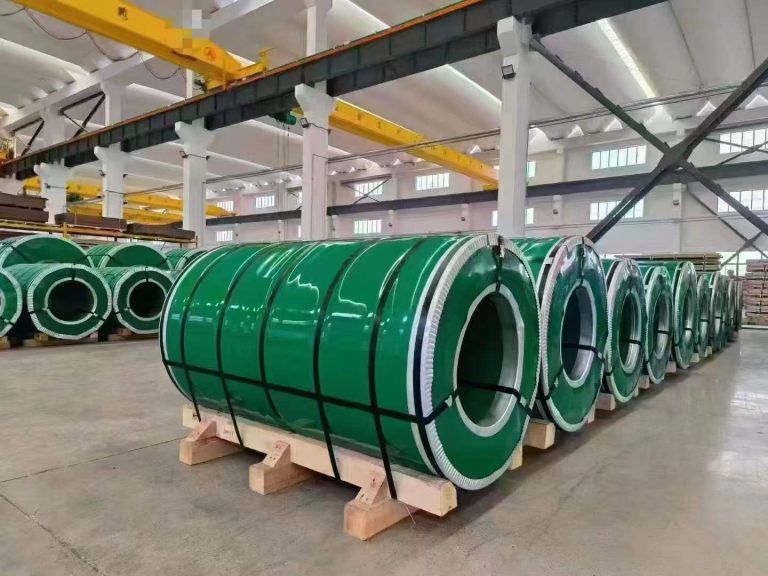
Complete Guide to Metal Materials: Types, Key Properties & Selection Tips for Industrial Applications
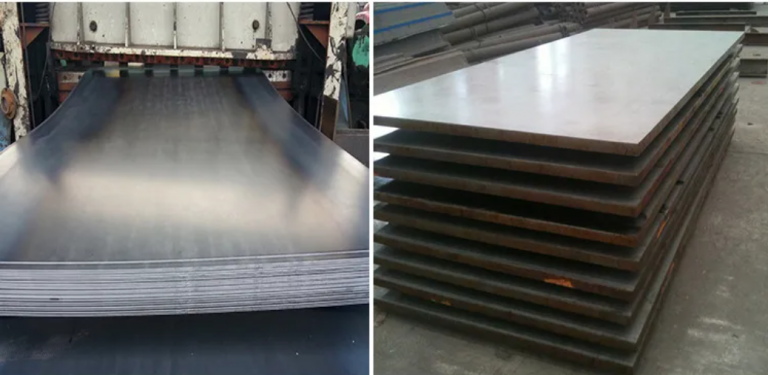
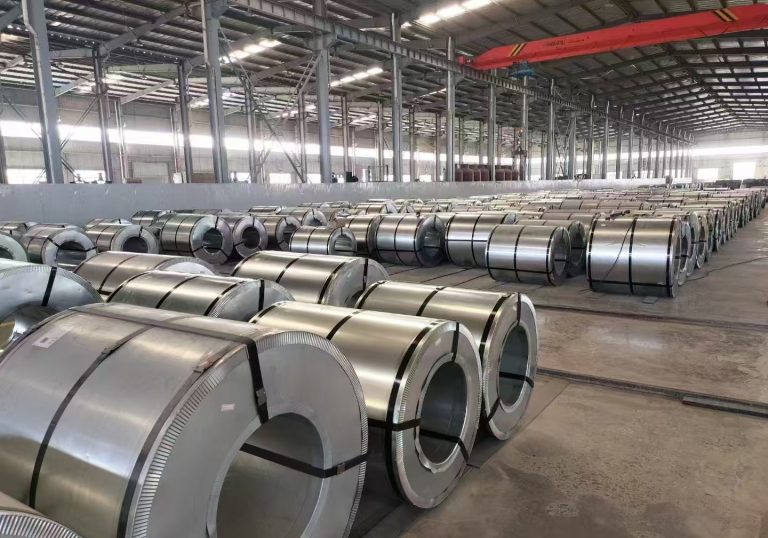
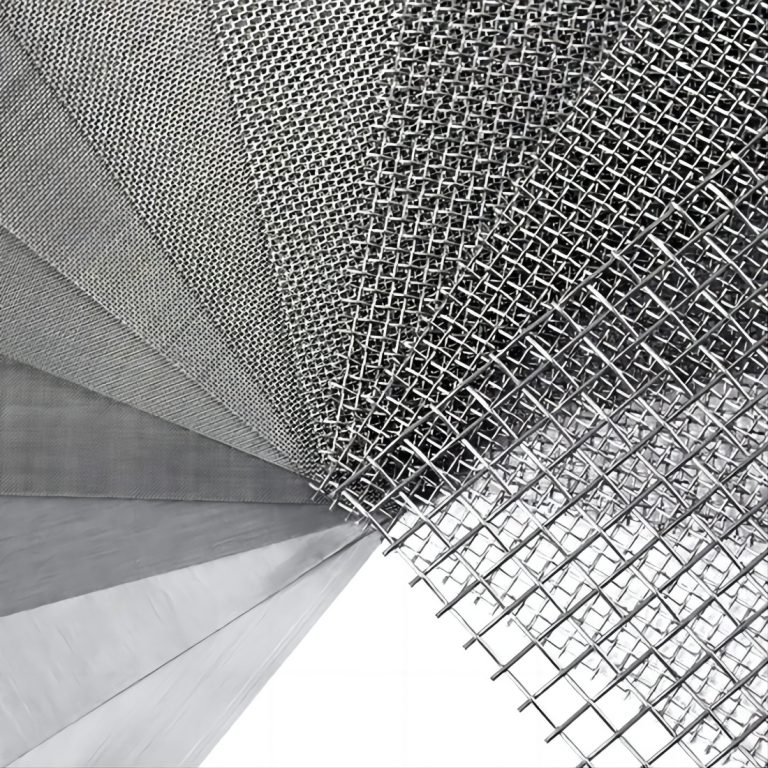
Metal materials form the backbone of modern manufacturing, construction, machinery and aerospace industries. Simply put, metal materials refer to pure metals or substances mainly composed of metallic elements that carry typical metallic characteristics. They cover pure metals, metal alloys, intermetallic compounds and special metallic materials. However, please note that metal oxides such as aluminium oxide do not belong to metal materials.
From ancient bronze and iron ages to today’s advanced industrial era, the progress of human civilisation has always gone hand in hand with the development and application of metal materials. While stone tools supported early human survival, the Bronze Age and Iron Age marked huge leaps driven by metal use. Even now, a wide range of metal materials still serve as the fundamental material foundation for global industrial development. Therefore, understanding metal material classification and performance is essential for engineers, procurement specialists and manufacturing buyers.
1. Main Classifications of Metal Materials
Generally speaking, metal materials fall into three major groups: ferrous metals, non-ferrous metals and special metal materials. Each category has distinct chemical composition, mechanical traits and suitable scenarios, so we will break them down one by one.
First, ferrous metals, also widely known as iron and steel materials. This group includes industrial pure iron with over 90% iron content, cast iron containing 2% to 4% carbon, carbon steel with less than 2% carbon, plus structural steel, stainless steel, heat-resistant steel, high-temperature alloys and precision alloys for diverse applications. In a broader definition, ferrous metals also include chromium, manganese and their alloys.
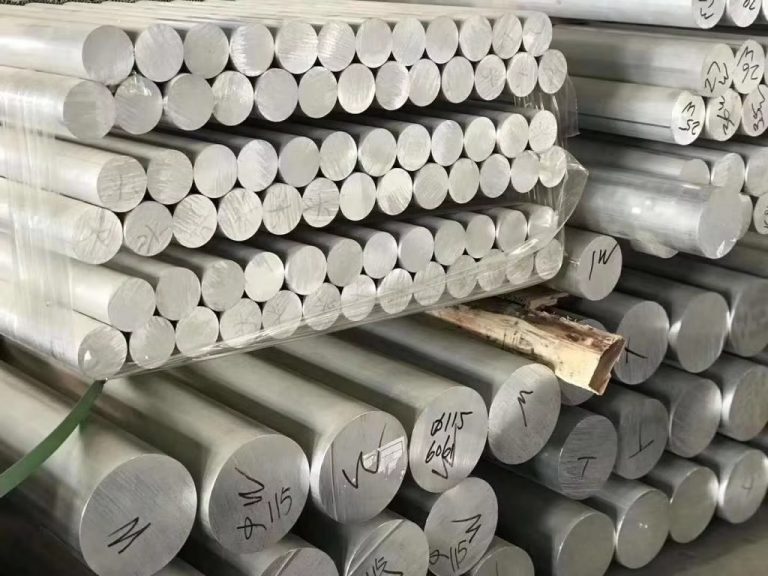
Second, non-ferrous metals. This term covers all metals and their alloys except iron, chromium and manganese. Non-ferrous metals can be further sorted into light metals, heavy metals, precious metals, semi-metals, rare metals and rare earth metals. Compared with pure non-ferrous metals, non-ferrous alloys usually deliver higher strength and hardness, together with larger electric resistance and smaller temperature coefficient of resistance.
Third, special metal materials. This category includes structural metals and functional metals developed for special purposes. For example, amorphous metals produced by rapid solidification technology, together with quasicrystalline, microcrystalline and nanocrystalline metals. Besides these structural options, there are special functional alloys for stealth, hydrogen resistance, superconductivity, shape memory, wear resistance and vibration damping, as well as metal matrix composites.
2. Two Core Groups of Metal Material Properties
When you select metal grades for machining parts, you need to evaluate two big property families: fabrication properties and service properties. In fact, these two sets of features decide whether a metal can be processed smoothly and whether it can work reliably in your final application.
Fabrication properties describe how metal behaves under cold or hot processing during part manufacturing. Good fabrication performance directly determines how easy it is to shape the metal into finished components. Since different manufacturing methods create different working conditions, we assess castability, weldability, forgeability, heat treatment performance and machinability separately.
On the other hand, service properties show how metal performs under real working conditions after the component is put into use. This family includes mechanical properties, physical properties and chemical properties. Service properties define the material’s usable range and service life. Most mechanical parts run under normal temperature, normal pressure and sometimes corrosive environments, and they constantly bear different types of loads. The ability to resist damage under external loads is called mechanical properties, previously named mechanical performance. Mechanical properties act as the primary reference for part design and material selection. Different load forms including tension, compression, torsion, impact and cyclic loading will require different mechanical performance from metals. Common mechanical indicators contain strength, ductility, hardness, impact toughness, repeated impact resistance and fatigue limit.
3. Critical Metal Material Characteristics You Must Know
3.1 Fatigue
Many mechanical components work under cyclic, alternating loads. Even when the working stress stays below the material’s yield strength, sudden brittle fracture may still happen after millions of repeated stress cycles. This phenomenon is metal fatigue, and fatigue fracture ranks among the most common and dangerous failure modes in engineering.
Fatigue failure has four obvious features: the applied stress alternates repeatedly; the load acts over a long period; fracture occurs instantly; both ductile and brittle materials show brittle fracture at the fatigue crack zone. According to working conditions, metal fatigue can be split into five types.
High-cycle fatigue is the most common fatigue case. It takes place under low stress, where stress remains below yield strength or even elastic limit, with more than 100,000 stress cycles. People usually shorten high-cycle fatigue directly to fatigue.
Low-cycle fatigue occurs under high stress or high strain close to the yield point, with cycle numbers from roughly 10,000 up to 100,000. Repeated plastic strain dominates the damage process, so it is also named plastic fatigue or strain fatigue.
Thermal fatigue comes from cyclic thermal stress generated by temperature changes, which gradually triggers cracking and failure.
Corrosion fatigue develops when alternating loads and corrosive media such as acid, alkali, seawater and active gas attack metal parts at the same time.
Contact fatigue appears on contact surfaces of moving components. Repeated contact stress causes pitting spalling or surface crushing spalling and eventually makes parts fail.
3.2 Ductility
Ductility means a metal can undergo permanent plastic deformation under external force without breaking. During tensile testing, metal samples change in length and cross-sectional area. Therefore engineers measure ductility through elongation and reduction of area.
Higher elongation and reduction of area values represent better ductility. Metals with elongation over 5% are classified as ductile materials such as mild steel, while materials with elongation below 5% are brittle materials like grey cast iron. Materials with good ductility can deform significantly before failure. What’s more, plastic deformation will strengthen the metal and raise its strength, improving safety for mechanical parts. Meanwhile, high ductility supports forming processes such as stamping, cold bending, cold drawing and straightening. For this reason, ductility indicators must be checked carefully when picking metals for mechanical parts.
3.3 Durability & Corrosion Forms
Durability largely depends on corrosion resistance. Metal corrosion reduces service life heavily, especially for structural metal products. The main corrosion types are listed below.
Uniform corrosion: the metal surface corrodes evenly and wall thickness reduces steadily. Average thickness loss per year, known as corrosion rate, is used for evaluation. Carbon steel exposed in the atmosphere typically suffers uniform corrosion.
Pitting corrosion: corrosion attacks local points and forms deep pits. It often happens in chloride-containing media, and the maximum pit depth is used for assessment. Pipeline corrosion assessment usually focuses on pitting risk.
Galvanic corrosion: this corrosion happens at contact points between dissimilar metals due to differences in electric potential.
Crevice corrosion: local corrosion develops inside gaps or hidden areas because of concentration differences of the surrounding medium.
Stress corrosion cracking: under combined tensile stress and corrosive environment, tiny cracks grow inward and may lead to sudden rupture. High-strength steel wires inside concrete may face this risk.
3.4 Hardness
Hardness describes a metal’s capacity to resist indentation from harder objects. It counts as one of the most vital performance indicators, and generally higher hardness brings better wear resistance. Three standard hardness testing methods are widely adopted: Brinell Hardness (HB), Rockwell Hardness (HR) and Vickers Hardness (HV).
Brinell Hardness (HB): A hardened steel ball of fixed size, normally 10 mm diameter, is pressed into the material surface under a set load, commonly 3000 kg. After load removal, HB value equals load divided by indentation area, with unit kgf/mm² or N/mm². Brinell testing is not suitable when HB exceeds 450 or for tiny samples.
Rockwell Hardness (HR): It uses a 120° diamond cone or steel balls of 1.59 mm / 3.18 mm diameter. Hardness is calculated from indentation depth under defined load. Different scales match different materials, marked by letters after HR. HRA uses a 60 kg diamond indenter for ultra-hard materials such as cemented carbide. HRB uses a 100 kg load plus 1.58 mm hardened steel ball for softer materials like annealed steel and cast iron. HRC applies a 150 kg diamond cone and is the most widely used scale for high-hardness quenched steel.
Vickers Hardness (HV): A 136° square diamond pyramid indenter works under loads less than 120 kg. HV value is load divided by surface area of the indentation pit. Hardness testing is simple and fast. In practice, approximate conversion relations exist between different hardness readings and material strength values, because hardness reflects resistance to plastic deformation. Higher material strength usually leads to higher hardness.
4. Four Major Performance Categories of Metal Materials
The full set of metal material performance covers mechanical properties, chemical properties, physical properties and fabrication properties, all of which jointly decide whether your material selection is reasonable.
4.1 Mechanical Properties
Stress refers to internal force per unit cross-sectional area. Working stress arises from external loads, while residual stress stays balanced inside materials without external force, including structural stress, thermal stress and processing residual stress.
Mechanical properties, also called mechanical performance, represent metals’ ability to resist deformation and fracture under external loads at certain temperatures. Loads can be static or dynamic, including tension, compression, bending, shear, torsion, friction, vibration and impact.
Strength
Strength describes the maximum ability to resist deformation and fracture under external force. It includes tensile strength, bending strength and compressive strength. Tensile strength σb is measured via tensile tests, with MPa as the unit. Yield strength σs marks the stress where obvious plastic deformation starts once stress exceeds elastic limit. For materials without clear yield point, 0.2% offset yield strength σ0.2 is adopted for design reference. Elastic limit σe stands for the maximum stress to maintain fully reversible elastic deformation. Elastic modulus E, calculated as stress divided by strain, reflects material stiffness.
Ductility
Ductility is the maximum capacity for permanent deformation without fracture. Two key metrics: percentage elongation δ and percentage reduction of area ψ. Elongation δ5 and δ10 refer to test samples with original gauge length equal to 5x or 10x sample diameter, because elongation results vary with sample dimensions. Higher δ and ψ values mean better ductility.
Toughness
Toughness describes resistance to fracture under impact load. Impact toughness αk is calculated from consumed impact energy divided by original cross-section area of the broken sample, in J/cm².
Fatigue Performance
Fatigue limit σ-1 is the maximum alternating stress that a sample can withstand for specified cycles without rupture, 10⁶~10⁷ cycles for steel and 10⁸ cycles for non-ferrous metals. Apart from these common indicators, high-demand sectors such as aerospace, nuclear power and power plants also evaluate creep limit, high-temperature rupture strength and notch sensitivity. Creep means slow plastic deformation over time under constant temperature and steady tensile load. High-temperature rupture strength is the maximum stress to keep samples unbroken for a required duration at fixed temperature.
4.2 Chemical Properties
Chemical properties describe how metals react with other substances. In industrial procurement, corrosion resistance and high-temperature oxidation resistance attract the most attention. Chemical performance, especially anti-corrosion capability, greatly influences corrosion fatigue damage of metal components.
4.3 Physical Properties
Physical properties are essential during material selection and non-destructive inspection.
Density (ρ): mass per unit volume. It helps calculate part weight and compare specific strength, which is tensile strength divided by density. Density also matters for acoustic impedance and radiation absorption in NDT.
Melting point: temperature of solid-liquid transition, directly affecting smelting, hot working and high-temperature service performance.
Thermal expansion: volume change with temperature, quantified by linear expansion coefficient. It is critical for parts working under alternating hot and cold conditions.
Magnetic properties: classify metals as paramagnetic, diamagnetic, soft magnetic and hard magnetic materials.
Electrical properties: mainly conductivity, affecting resistivity and eddy current loss in electromagnetic inspection.
4.4 Fabrication Properties
Fabrication properties show how well metal adapts to different manufacturing processes.
Machinability: how easy the material can be cut by turning, milling, planing or grinding tools.
Forgeability: how suitable the metal is for pressure forming, determined by ductility at high temperature, allowable hot working temperature range, thermal expansion and thermal conductivity.
Castability: performance when melted and poured into castings, including fluidity, gas absorption, oxidation, melting point, casting density and shrinkage rate.
Weldability: the ability to form solid, reliable joints under local rapid heating and melting, related to melting behaviour, oxidation, thermal expansion, ductility and microstructure changes near weld seams.
Wrap Up
In summary, metal materials cover a huge family from ferrous steel grades to advanced special alloys. When you choose metal materials for machinery, structural parts or custom metal fabrication, you need to balance classification, mechanical behaviour, corrosion resistance, physical features and processing feasibility at the same time. A wrong material pick may cause early fatigue cracking, corrosion failure or extra machining cost.
If you need metal material supply, custom metal parts or material test certificates, feel free to contact our team for detailed technical support and quotation.